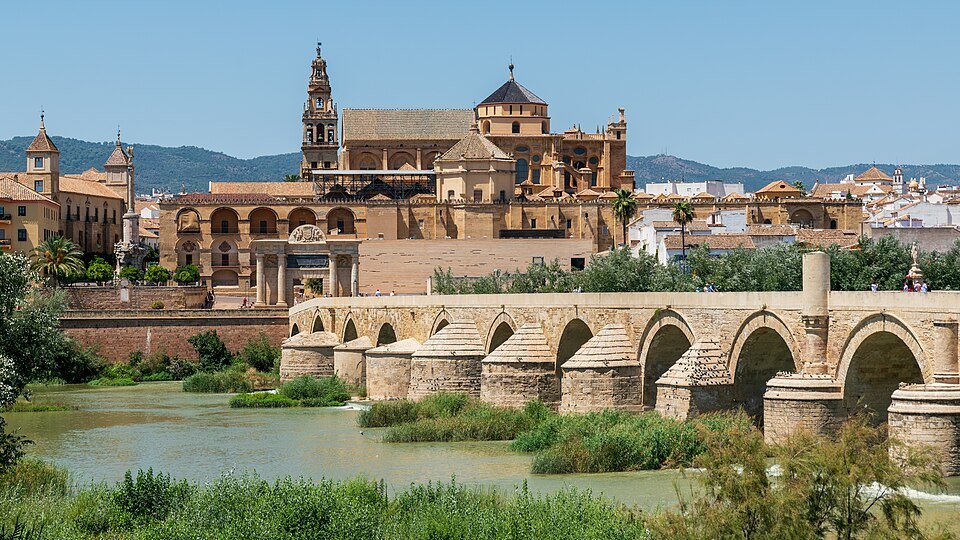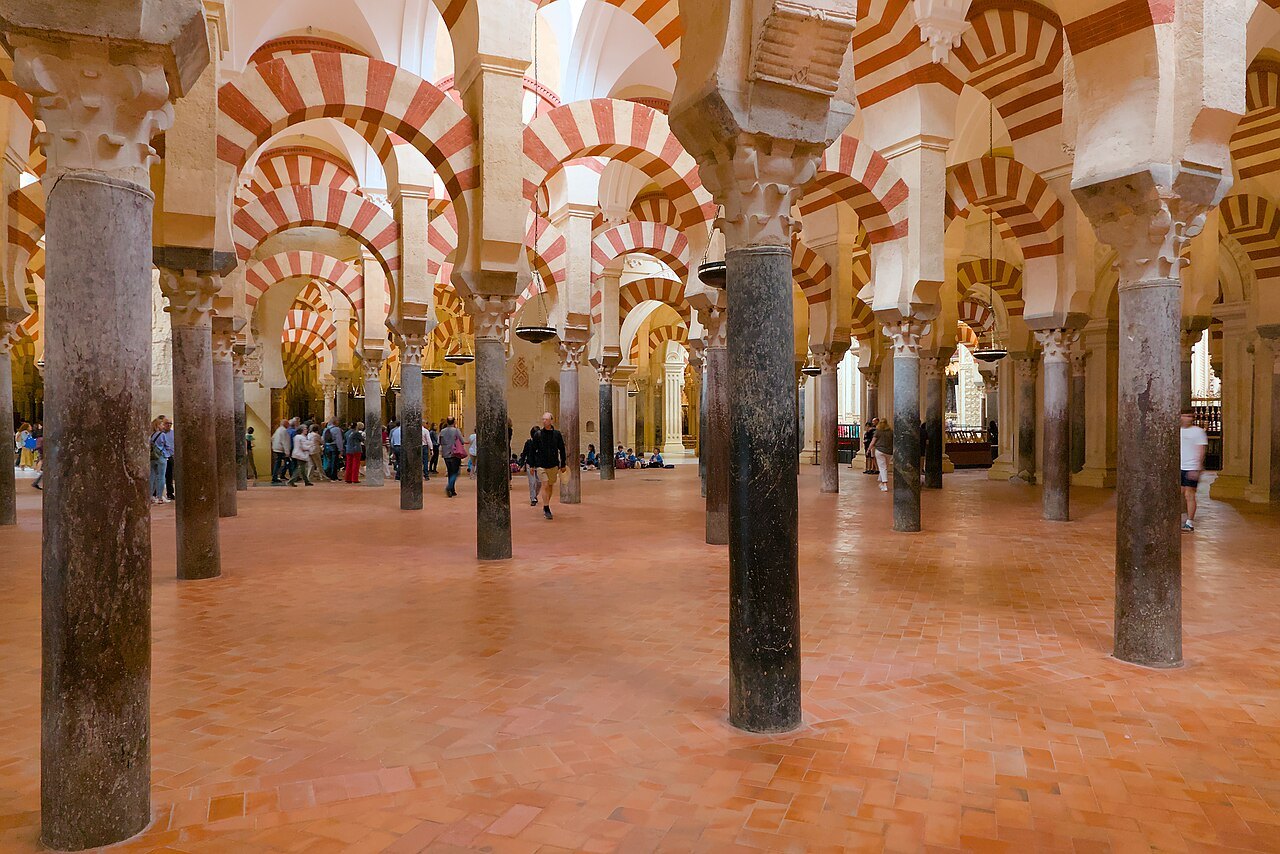
Building began in 785, under Abd al-Rahman I, on a site already used for worship. It was enlarged three times over the next two centuries, each expansion continuing the same idea outward: rows of columns carrying two tiers of arches, the upper tier lifting the roof far higher than a single arcade could.
The arches are the reason people stop in the doorway. They alternate pale stone and red brick in the voussoirs, and because the columns are close together and the rows run in every direction, the interior reads less as a room than as something you are standing inside. Over 800 columns remain today.
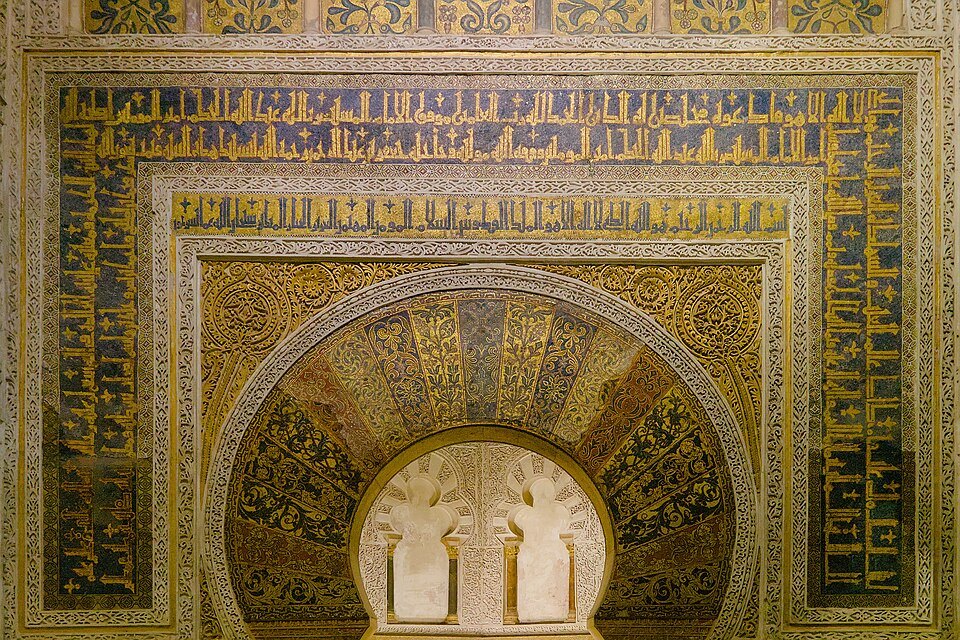
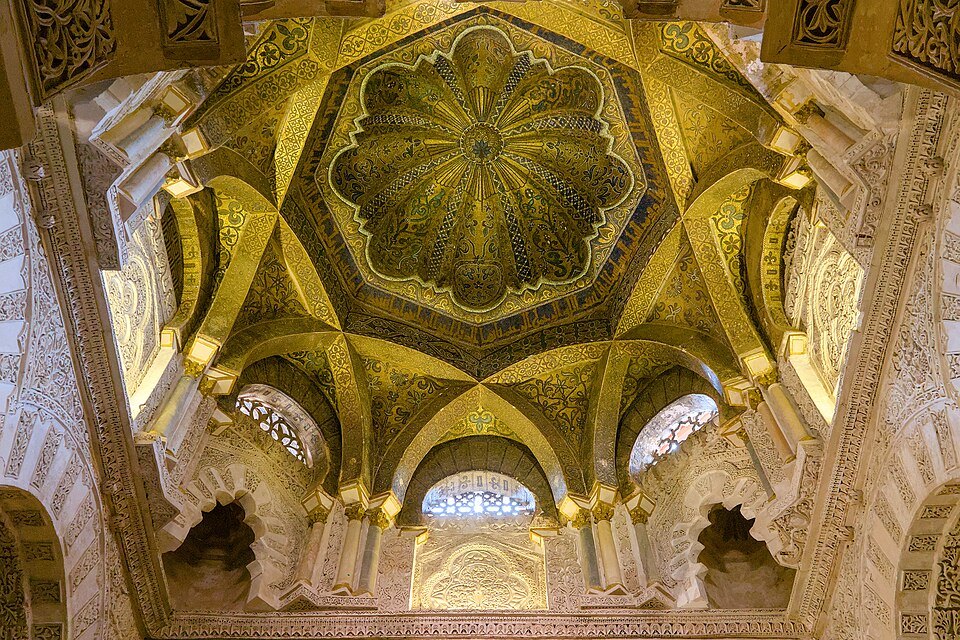
⭐ The mihrab, from the expansion under al-Hakam II, is the one part that stops being restrained. It is faced in gold mosaic, and the craftsmen were reportedly sent from Byzantium — a detail repeated so often it is worth saying plainly that it comes from the chronicles rather than from anything on the wall.
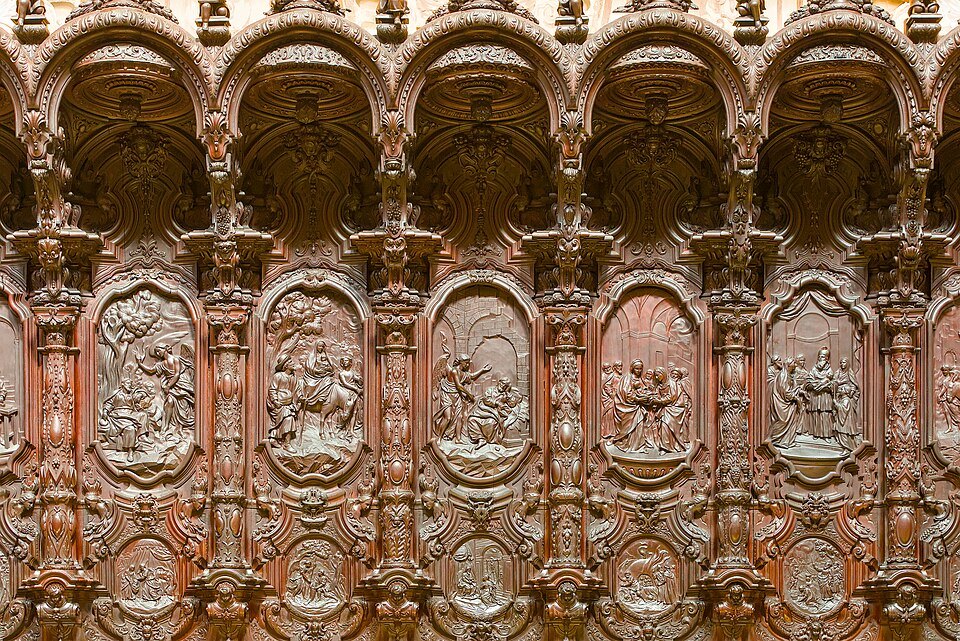
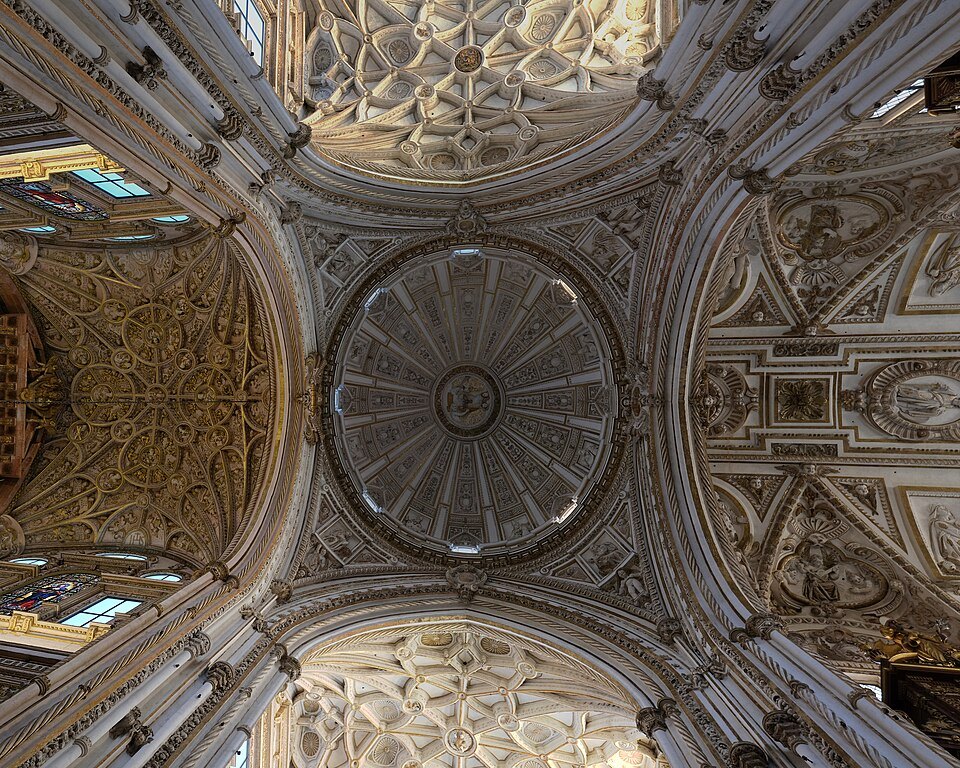
In 1523 a cathedral nave was begun in the middle of the building. It was controversial then and remains the first thing arguments about the building return to. What you see now is both structures at once, which is unusual anywhere and is the reason this is the one building in the city nobody skips.
⚠️ It is a cathedral and has been since the 13th century. Islamic prayer inside it is not permitted, and the question of whether it should be has been raised repeatedly and remains unresolved. This site records that rather than taking a side.
Go at opening. The building is at its best nearly empty, and the free early window on weekdays is the least crowded it gets — the chapter publishes the hour.
The Mezquita-Catedral, photographed